
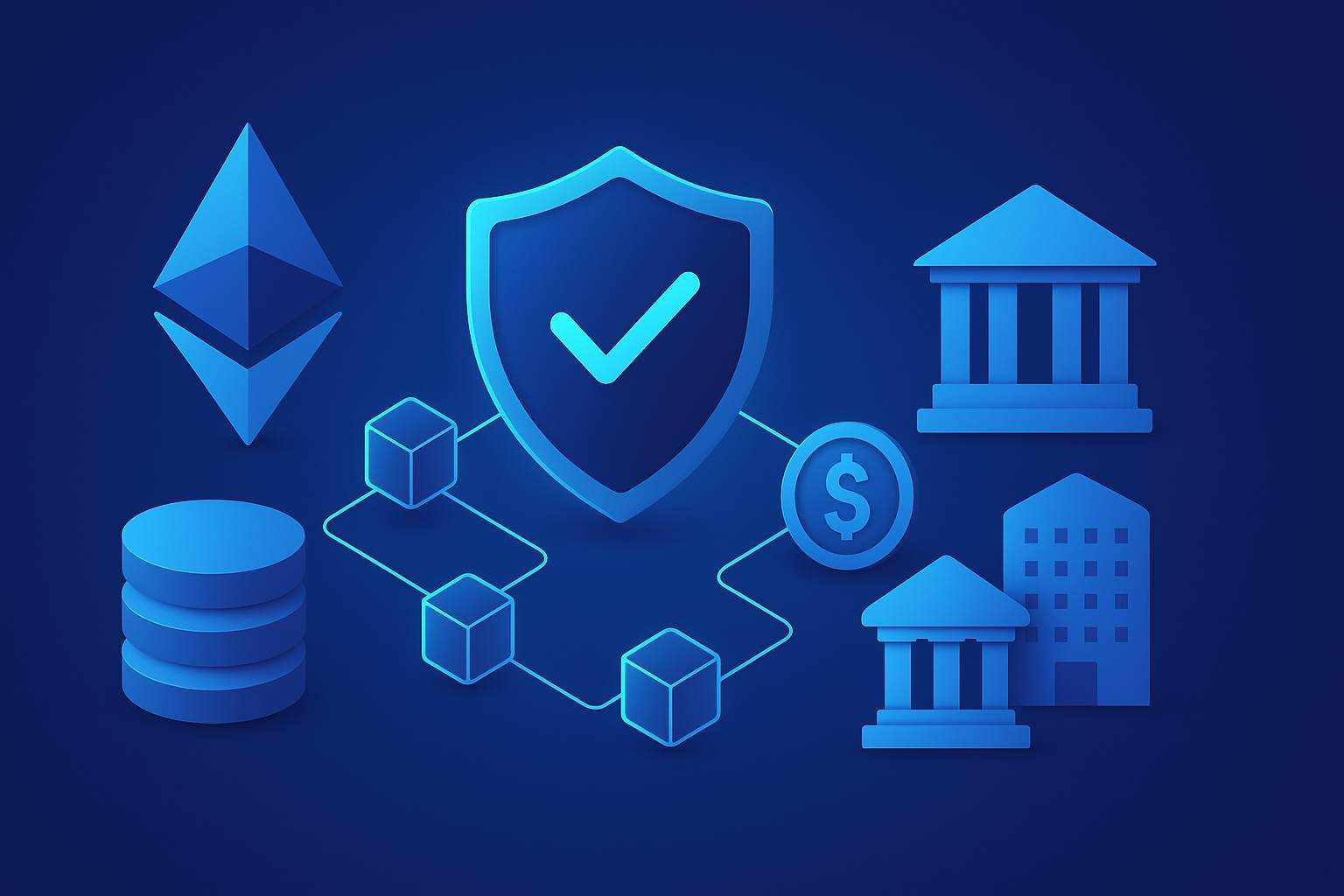
The digital economy is undergoing a massive transformation fueled by tokenization the process of converting assets, services, and even intellectual property (IP) into digital tokens on a blockchain. This shift has given rise to tokenized finance platforms, which bridge decentralized finance (DeFi) with tangible economic sectors such as artificial intelligence (AI), gaming, and creative intellectual property.
Among the models leading this charge is the Frontier Finance Model, a visionary approach that integrates tokenized economies, ownership incentives, and automated value distribution mechanisms. Through tokenized finance, businesses and developers can monetize data, reward participation, and create liquid markets for previously illiquid assets all while maintaining transparency and decentralization.
In this comprehensive guide, we’ll explore how to build tokenized finance platforms for AI, gaming, and IP ecosystems, drawing insights from the innovative structure of the Frontier Finance Model.
Understanding Tokenized Finance: The Foundation of the New Digital Economy
Tokenized finance involves digitizing assets into blockchain-based tokens that can represent ownership, access rights, or revenue participation. It enables new types of economic coordination where participants can contribute data, compute power, content, or creativity and be directly compensated through tokens.
Traditional financial systems often suffer from inefficiencies, middlemen, and barriers to participation. Tokenized finance changes this narrative by enabling fractional ownership, smart contract automation, and cross-border liquidity. Whether it’s AI datasets, gaming assets, or IP royalties, tokenization allows these assets to be traded or leveraged across global markets.
The key advantages include:
Increased liquidity of assets like data or royalties.
Programmable value flows through smart contracts.
Decentralized governance allowing stakeholders to shape platform rules.
Enhanced inclusivity for creators, developers, and investors alike.
What Is the Frontier Finance Model?
The Frontier Finance Model is a framework for designing tokenized ecosystems that merge finance, technology, and user engagement. It emphasizes ownership-driven economies, automated financial operations, and cross-sector interoperability.
At its core, the model supports:
Tokenized value creation: Every participant contributes to and benefits from a shared economy.
Automated DeFi mechanisms: Yield farming, staking, and lending integrated into the platform.
Data-backed monetization: Especially relevant for AI, where data contributors are rewarded based on model utility.
Community-driven governance: Through decentralized autonomous organizations (DAOs).
Frontier Finance provides a scalable template for sectors that depend heavily on digital assets and user-generated value particularly AI, gaming, and IP management.
The Role of Tokenization in AI, Gaming, and IP Ecosystems
Each of these sectors benefits uniquely from tokenized finance:
AI: Tokenization enables fair data monetization and incentivized model training. Contributors of datasets or compute resources can receive tokens representing ownership or royalties from AI-generated insights.
Gaming: Play-to-earn models tokenize in-game items, currencies, and achievements, transforming gaming economies into decentralized marketplaces where players have genuine ownership.
IP: Tokenizing IP allows creators to fractionalize ownership, sell royalty shares, and automate licensing revenues through smart contracts.
In all three cases, tokenized finance establishes a continuous feedback loop of value, where contributions are transparently measured and rewarded in real-time.
Step 1: Defining the Platform Architecture
The foundation of any tokenized finance platform lies in a well-structured architecture. This includes multiple layers that define asset creation, transaction flow, governance, and integration.
A robust platform typically includes:
Asset Tokenization Layer – Responsible for minting tokens that represent data, gaming assets, or IP rights.
Smart Contract Layer – Automates ownership transfers, payments, and staking mechanisms.
DeFi Integration Layer – Connects tokenized assets with liquidity pools, lending markets, or staking mechanisms.
Governance Layer – Enables community voting and policy-making via DAOs.
Interface Layer – Provides users with a dashboard to trade, manage assets, or interact with the ecosystem.
By ensuring modularity and interoperability, developers can build scalable systems that adapt across industries while maintaining consistent financial logic.
Step 2: Designing Tokenomics for Sustainable Growth
Tokenomics forms the economic backbone of a tokenized platform. It determines how tokens are distributed, utilized, and circulated within the ecosystem.
For AI, gaming, and IP sectors, tokenomics should encourage long-term participation rather than short-term speculation. The ideal model balances utility, governance, and incentive.
Key elements of effective tokenomics:
Dual-token models: One for governance (DAO participation) and another for utility (transactions, staking).
Reward distribution mechanisms: Tokens for data sharing, gaming achievements, or IP licensing.
Deflationary controls: Token burns or buybacks to stabilize value.
Liquidity pools: Encourage trading while maintaining price stability.
For example, in AI data marketplaces, data contributors could stake their tokens for visibility or earn yield as their data powers AI models. In gaming, tokens can be earned through gameplay and used to unlock premium assets. For IP, creators could tokenize royalties and offer investors participation rights.
Step 3: Building Smart Contract Infrastructure
Smart contracts automate all financial and operational processes in a tokenized platform. These programmable codes define how tokens move, rewards are calculated, and ownership is verified.
When designing smart contracts for AI, gaming, and IP platforms:
AI: Automate reward distribution for dataset usage or model licensing.
Gaming: Manage NFT minting, player rewards, and asset transfers between users.
IP: Track ownership rights, automate royalty payments, and facilitate fractional ownership sales.
To ensure security and compliance, smart contracts must undergo rigorous audits, gas optimization, and upgradeable contract mechanisms (using proxy patterns like OpenZeppelin’s upgrades).
Smart contracts serve as the trust layer replacing intermediaries and ensuring all transactions occur transparently according to code.
Step 4: Integrating DeFi Mechanisms
Tokenized finance thrives when users can do more than just hold tokens. DeFi integration enables additional value generation through lending, borrowing, staking, and liquidity provision.
For instance:
AI tokens can be staked to access exclusive data models or computing resources.
Gaming tokens can be used in yield-generating pools where players earn rewards passively.
IP tokens can be collateralized for loans, unlocking liquidity from future royalty streams.
Integrating DeFi protocols such as Aave, Uniswap, or Curve enhances token utility and creates continuous economic motion within the ecosystem. Frontier Finance emphasizes the fusion of DeFi’s liquidity and industry-specific tokenization to drive cross-sector financial innovation.
Step 5: Data and Asset Validation Mechanisms
A major challenge in AI, gaming, and IP tokenization is ensuring the authenticity and provenance of assets. Tokenized finance must incorporate robust validation frameworks.
For AI: Use decentralized oracles and data verification protocols to ensure datasets are genuine and bias-free.
For Gaming: Implement asset provenance tracking for NFTs to prevent duplication or fraud.
For IP: Utilize on-chain registries to validate ownership and ensure tokens correspond to legally recognized IP rights.
Decentralized verification models, such as Proof of Contribution or Proof of Authenticity, align with Frontier Finance’s principle of verifiable participation.
Step 6: Governance and Community Ownership
A successful tokenized finance platform thrives on community engagement. Through decentralized governance, token holders gain decision-making power over platform updates, policies, and reward mechanisms.
Implementing DAO frameworks ensures:
Transparent policy-making.
Distributed voting on proposals.
Shared ownership of the platform’s evolution.
In the Frontier Finance Model, governance is not an afterthought it is central to maintaining fairness and long-term sustainability. For example, in AI platforms, DAO members might vote on data usage ethics, while gaming communities decide on in-game economy updates.
Step 7: Regulatory and Compliance Framework
Tokenized finance operates at the intersection of innovation and regulation. To ensure longevity, platforms must adhere to global financial and data compliance standards.
Key considerations include:
KYC/AML integration for participant onboarding.
Compliance with intellectual property laws for IP tokenization.
GDPR and data privacy adherence for AI platforms.
Taxation and reporting frameworks for yield-earning activities.
Developers should integrate regulatory automation tools to streamline compliance processes, aligning innovation with lawful operation. Frontier Finance encourages proactive compliance to foster institutional adoption.
Step 8: Monetization Models and Revenue Streams
A sustainable tokenized finance platform must generate continuous value for both users and operators. Revenue models differ across AI, gaming, and IP verticals:
AI Platforms: Monetize through tokenized data access fees, compute leasing, or AI model royalties.
Gaming Platforms: Earn from NFT sales, marketplace transaction fees, or premium token-based memberships.
IP Platforms: Generate recurring revenue from fractional IP ownership sales or royalty-sharing mechanisms.
Additionally, DeFi mechanisms (staking, yield farming, liquidity mining) can complement primary income channels, ensuring a self-reinforcing economic ecosystem.
Step 9: Launching the Tokenized Platform
The launch phase combines marketing, technical deployment, and user onboarding. It involves:
Token Generation Event (TGE): Introduce tokens to the market with clear utility and governance frameworks.
Community Building: Foster user engagement through social campaigns, partnerships, and influencer collaborations.
Ecosystem Expansion: Integrate with cross-chain bridges and decentralized exchanges for liquidity access.
Security Audits: Perform third-party audits before launch to ensure contract integrity.
Successful launches balance technological readiness with strong narrative storytelling emphasizing user empowerment, ownership, and innovation.
Step 10: Long-Term Sustainability and Growth
Post-launch, maintaining growth requires continuous innovation, ecosystem partnerships, and community engagement.
Introduce AI-integrated analytics for token usage tracking and predictive economics.
Expand to multi-chain ecosystems to access diverse liquidity pools.
Encourage developer participation through open APIs and grants.
Integrate cross-sector collaborations (e.g., AI models powering gaming environments or IP-backed NFT collectibles).
Frontier Finance highlights the importance of adaptive economies systems that evolve dynamically with technological trends and user needs.
Case Studies: Real-World Inspiration
1. Ocean Protocol (AI Data Tokenization)
Ocean Protocol enables data owners to tokenize and sell access to AI datasets using blockchain. Each dataset is represented as a unique token, and users can stake on high-value datasets to earn rewards. This democratizes AI development and ensures contributors share in the economic value created by machine learning models.
2. Axie Infinity (Gaming Token Economy)
Axie Infinity pioneered the play-to-earn gaming model by tokenizing game assets as NFTs and enabling a dual-token system (AXS and SLP). Players earn real income through gameplay, staking, and trading turning gaming into a sustainable micro-economy.
3. Royal.io (IP and Music Tokenization)
Royal.io allows artists to tokenize music royalties, offering fans fractional ownership and revenue participation. Through smart contracts, royalties are distributed automatically, ensuring transparency and eliminating intermediaries.
These examples align closely with the Frontier Finance philosophy, illustrating how tokenization transforms industries by decentralizing ownership and monetization.
Insights from the Frontier Finance Model
The Frontier Finance Model provides key takeaways for building successful tokenized ecosystems:
Interconnected Economies: Cross-industry token interoperability enables shared value creation.
Incentive Alignment: Reward all contributors fairly, from creators to consumers.
Data and Transparency: On-chain analytics provide trust and accountability.
Dynamic Governance: DAOs ensure adaptability in changing market conditions.
Long-term Ecosystem Thinking: Beyond speculation, focus on real utility and user engagement.
By combining these principles, developers can craft resilient financial ecosystems that sustain innovation across AI, gaming, and IP.
Challenges and Future Outlook
While tokenized finance holds immense promise, it faces challenges such as regulatory ambiguity, scalability constraints, and user education gaps. However, with layer-2 scalability solutions, cross-chain interoperability, and decentralized identity systems, these barriers are rapidly diminishing.
Looking ahead, the convergence of AI and DeFi (AI-Fi), on-chain gaming economies, and tokenized IP portfolios will reshape global financial landscapes. Tokenized finance platforms will form the backbone of a new economy where data, creativity, and digital participation are directly monetized through blockchain.
Conclusion
Tokenized finance represents the next frontier in global economic evolution an era where every contribution, whether data, creativity, or participation, can be quantified and rewarded transparently.
By drawing insights from the Frontier Finance Model, developers can design ecosystems that unite AI, gaming, and IP under a shared framework of decentralized ownership and programmable value.
As tokenization continues to redefine how assets tokenization are created and exchanged, the future belongs to platforms that merge innovation with fairness, automation with accessibility, and finance with creativity.








Write a comment ...